

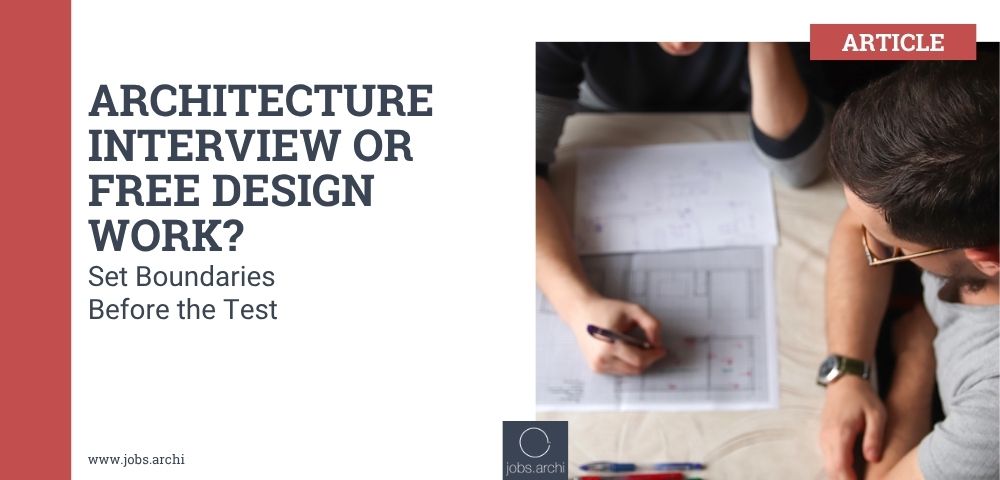
 An architecture interview can reasonably include a portfolio review, technical questions and a conversation with the people you would work with. It can also expand into repeated meetings and a design assignment that starts to resemble unpaid project work. A widely discussed hiring-process example concerned a remote permitting PM role at a technology start-up, not a conventional architecture studio. Commenters disagreed about whether the extensive process was justified; the case prompted a broader question about candidate time.
There is no universal number of interview hours that makes a process fair. Seniority, role and local employment rules differ. But a fair process should have a stated purpose, a reasonable scope, a clear timeline and respect for the candidate’s existing work. You can ask for those things professionally before you invest more time.
What each stage should establish
A short screening call should confirm role, location, salary range where available, work authorisation and broad fit. A hiring-manager interview should explore projects, responsibilities and the work you would do. A portfolio or technical review should test how you think, what you personally contributed and how you respond to constraints. A final conversation may let both sides meet the future team and resolve open questions.
Several people may need to participate, but repeating the same questions in five separate calls is not automatically more rigorous. Ask what the next stage will assess that has not already been covered. A good employer should be able to explain its process and expected decision date.
The AIA’s interviews with architecture hiring managers show why clear portfolio evidence and preparation matter. That does not give an employer unlimited access to your time or project ideas.
Before accepting a design test, ask six questions
- What skill is being assessed? Drawing clarity, spatial reasoning, model coordination and client communication call for different tasks.
- How long should it take? Ask for the expected time, not only the submission deadline.
- Is it hypothetical? A task based on an active client commission raises different questions from a fictional exercise.
- Who owns and may use the work? Ask for written terms if the firm requests a substantial original proposal.
- Will it be paid? Practices and legal requirements vary; clarify before starting.
- How will it be reviewed? A short explanation of criteria and feedback is more respectful than a black box.
You can say: “I am happy to demonstrate how I approach a problem. Could you tell me the expected time, whether the brief relates to a live project, and how the submission will be used?” That question is calm and specific. A firm that cannot answer may not have designed the assessment well.
Show thinking without giving away a complete proposal
If the test is legitimate and bounded, state assumptions up front. For a fictional small site, show a brief interpretation, two options, a constraint check and why you chose one. Mark what requires a survey, consultant or code review. This demonstrates judgment without pretending you can design a permitted building from a one-page brief.
If the brief demands a complete client-ready concept, multiple rendered views and construction details over a weekend, propose a narrower alternative: a portfolio walkthrough of similar work, a timed discussion with a sketch, or a paid assignment. The company may decline. You still have the right to decide whether the opportunity justifies the time.
Do not submit confidential drawings from your current employer as a substitute. Use work you are authorised to show, redact details properly or build a clearly labelled sample. Explain your contribution. A beautiful project image does not answer whether you designed it, documented it or only rendered it.
Recognise warning patterns without overreacting
One delayed reply is ordinary. A pattern is more informative: the firm cannot state the number of stages, keeps adding interviewers, repeatedly changes the brief, asks for unpaid revisions to a live proposal, or will not discuss role and pay until after a long test. So is a demand for a rapid response while the employer takes weeks to answer basic questions.
At the same time, a careful process can be a good sign. Meeting the project lead and a future teammate may help you assess supervision. A short technical exercise can be fair if its purpose, duration and use are transparent. Judge the total cost and information gained at each stage.
Keep a private log of time spent applying, interviewing, travelling and testing. Your time is part of the effective cost of a job search, even if no invoice exists. It helps you notice when one uncertain opportunity consumes the time you planned for several better-matched roles.
Questions to ask the employer in the interview
Ask what project and stage you would join, who reviews work, how decisions are recorded and what the first 90 days would look like. Ask how the firm handles a deadline change or a conflict between client preference and technical requirements. These questions demonstrate professional thinking while giving you evidence about the role.
For a portfolio review, invite the interviewer to choose one drawing and ask about it. Be ready to say what you did, who checked it, what changed and what you would improve. If you are early career, honesty about limits is stronger than claiming full responsibility for an entire team project.
Ask about the decision process near the end: “What remains for the team to learn about my fit, and when do you expect to decide?” This can prevent another vague stage being added without a purpose.
How to decline or negotiate a test politely
Try a response that preserves the relationship: “Thank you for the invitation. I can commit about two hours to a fictional exercise this week. The current brief looks closer to a full concept package. Would a shorter option study, or a discussion of comparable work in my portfolio, give you the evidence you need?”
For a live project, ask about a paid scope and terms before producing usable deliverables. You are not accusing the firm of bad faith; you are defining the work. If the firm says the test must be completed exactly as written, decide based on the role’s value to you, the time required and the risk of your work being used.
Where you suspect unlawful unpaid work or misuse of your intellectual property, seek advice from the relevant local professional or employment authority. This article cannot establish legal rights across jurisdictions.
Protect momentum during a long process
Keep applying until you have a written offer you intend to accept. An enthusiastic second interview is not an offer. After each stage, send a brief note confirming any agreed next step. If the deadline passes, follow up once. If the firm cannot provide a timeline, decide how long you are willing to wait and continue other conversations.
Compare the total offer, not just the interview experience. A respectful process does not guarantee good pay or work-life balance; a clumsy process does not automatically mean a toxic team. Use the interviews to test both the job and the firm’s way of making decisions.
An interview-stage decision rule
Before each additional stage, ask yourself what you will learn and what the employer will learn. If the next meeting introduces a future teammate or resolves a technical doubt, the time may be worthwhile. If it repeats the same conversation without new criteria, request clarity. A candidate with limited time can also ask whether two interviewers can join one session rather than schedule separate calls.
Set a personal time budget for an opportunity. It can change if the role becomes more attractive, but naming it prevents a slow process from consuming your entire search. Record travel and preparation as well as meeting time. If a substantial test would displace paid work or another interview, discuss scope or payment before committing.
For more general preparation, our earlier architecture interview guide covers presentation. This article focuses on scope, time and boundaries during hiring.
FAQ: Is a design test normal in architecture hiring?
Some firms use one, but the format and value vary. Ask what it measures, how long it should take, whether the brief is hypothetical and how the work will be used before agreeing.
FAQ: Can I refuse an unpaid assignment?
You can decide not to participate or propose an alternative. Whether payment is legally required depends on the jurisdiction and nature of the work. Clarify the facts and seek local guidance if necessary.
The takeaway
A good interview should reduce uncertainty for both sides. Ask for the purpose and limits of every stage, demonstrate your real work and protect time for other opportunities. A firm that can explain its assessment clearly is easier to evaluate than one that simply keeps asking for more.
The post Architecture Interview or Free Design Work? Set Boundaries Before the Test first appeared on jobs.archi.