

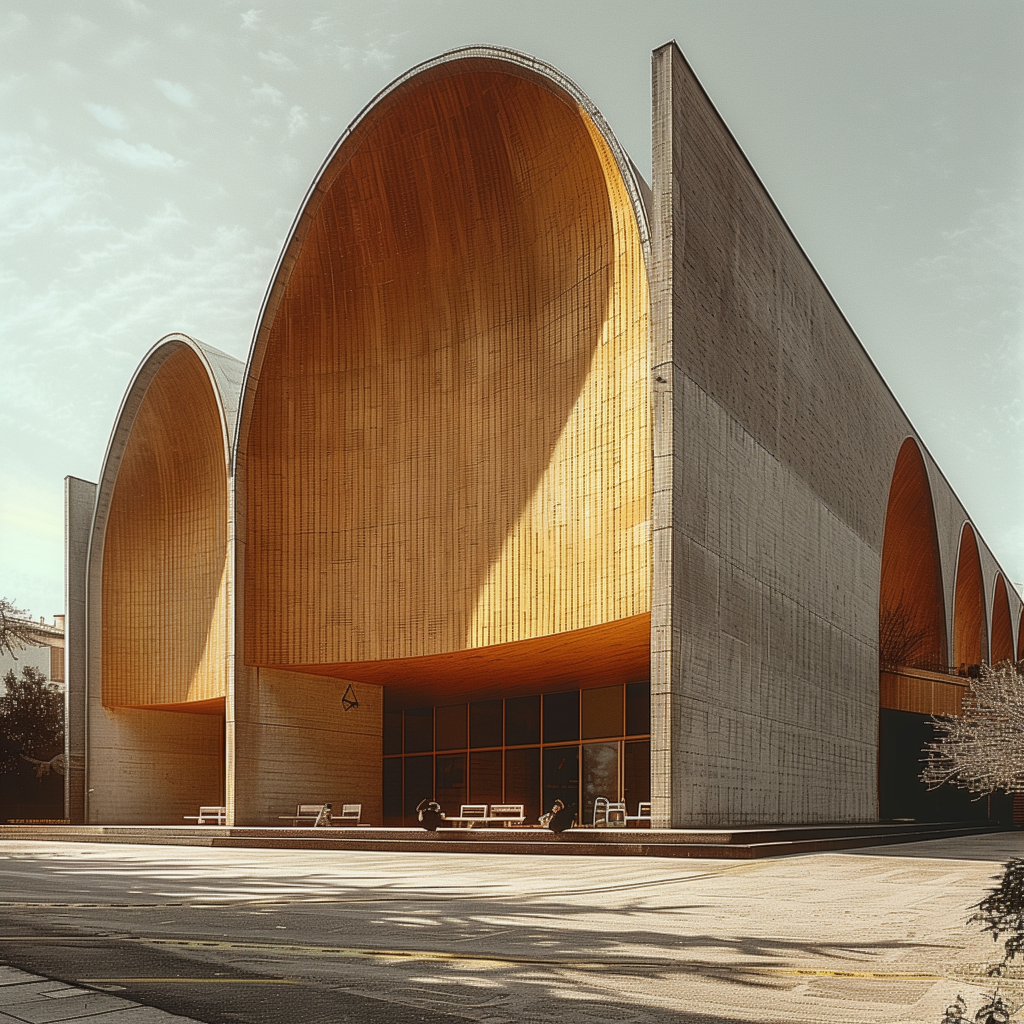
Is AI a threat to creativity, or the ultimate tool for architectural survival? While the industry debated, Daeho Lee spent a year in the trenches of Midjourney, testing how generative software actually fits into a professional workflow.
In this insightful essay from the Architecture Competitions Yearbook, Daeho breaks down the “Three Stages” of design—Inspiration, Mutation, and Selection—and shows why AI is a game-changer for the middle step. Whether you’re a student looking to speed up your process or a small studio owner trying to compete with the big players, this article moves past the AI cliches. It’s a practical look at how to use prompts as “raw sketches” and why your personal “design taste” is now more important than ever.
The Emergence of AI Software and its Integration into the Design Processes
Daeho Lee elaborates on the enhancing qualities of generative AI software, from time-saving and increased accuracy to an overall upgrade in the design quality and creativity, not shying away from concerns related to its integration.


AI software for image generation is gradually causing a potential paradigm shift in the design industry. There is a growing debate over what truly constitutes creativity, accompanied by concerns that creative endeavors might be eroded by AI. As a user who has consistently explored AI software and engaged repeatedly in creative design processes in architectural practice, I have discovered positive potential in AI software, which I wish to share through this article.
The Importance of the Creative Design Process in Architectural Practice and Survival Strategies of Design Offices
Architectural firms adopt survival strategies that leverage their unique design ability and specialized identity as design firms. While some architects focused on design distinguish themselves from others with their design-based strategies, others are characterized by their role as architects of record (AOR), specializing in project permitting processes, coordination with various consultants, and the completeness of construction drawings and onsite construction administration. Some offices that pursue both aspects certainly exist.
For design-focused offices that leverage their strong design abilities for differentiation, the creative design process is their most vital survival strategy. They typically concentrate most of their key staff on the initial stages of the design, known as the concept design phase. This phase involves generating the initial ideas and conceptualizing the project’s overall vision. It is a stage where creativity flourishes, and the core principles of the design are established. The quality and uniqueness of the concept design can significantly influence the project’s success and the office’s reputation.
In this highly competitive field, having a robust creative design process is essential for attracting clients and standing out in the market. The ability to produce innovative and aesthetically pleasing designs can set a firm apart from its competitors. As such, investing in the early stages of design, where creativity is paramount, is a strategic move for design-focused architectural firms.


The Evolution of Computation and the New Emergence of Image-Generating AI Software
To date, computation technologies such as Grasshopper and other 3D scripting tools have been limited to generating numerous variations once we have the initial concept ideas or directions. Most design offices still predominantly use intuitive sketches and physical concept models to develop the initial spatial concepts.
Participating in the early stages of the creative design process, I have often felt a significant gap between the intuitive early concepts and the accuracy-based computation technologies. While script-based 3D software like Grasshopper becomes effective after the design direction is established, the newly contentious image-generating AI software fundamentally differs from traditional computation tools and intriguingly holds the potential to exert tremendous influence right from the concept design stage.
AI software, such as Midjourney, DALL-E, and other generative models, introduces a new paradigm where designers can input simple text prompts or images and receive a wide array of design variations. This capability bridges the gap between the initial, often vague, conceptual ideas and the more precise, detailed stages of design development. By generating multiple options quickly, AI enables designers to explore a broader range of possibilities and refine their concepts more effectively.


The Structural Similarity Between the Creative Design Process and Generative AI Software
Based on practical experience in design offices in Europe and New York, I have observed that despite the numerous methodologies in creative design processes across architecture, music, art, and design, there is a consistently common logical structure. This structure can be summarized into three stages:
- Inspiration: Researching and collecting inspiration.
- Mutation/Variation: Creating selective aggregation and transformation options from the collected data.
- Selection/Refinement: Determining and refining the optimal option from the second stage.
In design offices, there is a strong commitment to building their own database to the extent of establishing specialized research departments for the first stage—collecting inspirations. This phase involves scouring various sources, from historical references to contemporary art works, to build a rich repository of ideas that can inform the design process. These inspirations serve as the seeds from which innovative concepts can grow.


Additionally, many junior staff members in the design office are involved in the experimentation roles of the second stage, mutation and variation. This phase is characterized by exploring different combinations and alterations of the collected inspirations, experimenting with forms, materials, and spatial arrangements. The goal is to generate a diverse set of options that push the boundaries of conventional design thinking.
The design director, who has to make the final selection, requires the most skill in the third stage. This stage is critical as it involves evaluating the generated options, refining the chosen design, and ensuring it aligns with the project’s goals and the client’s vision. The design director’s expertise and judgment are crucial in transforming the experimental variations into a coherent and compelling final design.
The remarkable aspect of using AI generative image programs (I mainly use Midjourney, so I will focus on its interface) is that the logic of AI image software is strikingly similar to the three stages of the creative design process mentioned earlier. Particularly in the second stage, AI is more efficient and generates a greater number of mutation options than humans.
Users input prompt texts or prompt images into the AI program (stage 1), and the AI provides a vast array of recreated options based on the input (stage 2). Users then select their desired image outcome or unexpectedly interesting options from these numerous choices and request partial modifications from the AI (stage 3).


This streamlined workflow allows designers to quickly iterate through different design possibilities, significantly reducing the time and effort required to explore various options. The ability to generate and refine multiple design iterations in a fraction of the time it would take using traditional methods enhances the overall efficiency and creativity of the design process. By utilizing the three stages of input, variation, and selection in a bundled manner, two different design tasks—building massing and facade design—can be executed consecutively.
Despite the traditional methods still being prevalent, the integration of AI into the design process offers a new dimension. AI software, like Midjourney, can assist in the second stage of mutation and variation by generating numerous options based on the initial input provided by the designer. This capability can significantly reduce the time and effort required to explore different design possibilities.
By utilizing AI, designers can focus more on the input and selection aspects of the design rather than getting bogged down in the repetitive and time-consuming tasks of manually generating and refining multiple design variations. This shift allows for a more efficient and effective design process, where the emphasis is placed on innovation and creativity.


Originality vs Creativity
All creative acts require various inputs of inspiration and references. Currently, hip-hop music sampling and the active referencing in pop art emphasize the ability to recreate existing examples with individual uniqueness over the originality itself. (Of course, ethical issues such as royalties and credit acknowledgment for the original creators still need significant improvement. The issue of music sampling also operates on the principle of agreement with the original creators, but the boundary between original creation and influenced work remains a contentious topic.)
Generative AI image programs have a tremendous advantage in the second stage—mutation—of the three stages of the creative process mentioned earlier: input, mutation, and selection. While one might criticize the act of not directly performing mutations in the second stage, the ability to provide good inputs to the AI in the first stage and to “select” the optimal option from thousands of AI-generated mutations still relies on the designer’s judgment.
Using AI still requires the ability to select good inputs and choose good outcomes. The level of sophisticated design taste and the ability to discern what will appeal to the public remain firmly within the designer’s realm. In other words, the ability to provide intriguing inputs to the AI and to curate and select from the myriad of AI-generated options are areas where designers can maintain a collaborative relationship with AI and distinguish themselves.


Midjourney (Ai Software Introduction)
I would like to introduce a brief review and the process of my work using the MidJourney program for over a year. As previously mentioned, MidJourney involves three stages: prompt -> image generation -> selection and partial modification. The most crucial part for software users in having AI generate images is the two types of prompts (text or image) provided by MidJourney.
From my understanding, there are no fixed rules for text prompts, but I usually list descriptions of the imagined image in the order of importance. I start the text prompt by detailing the key materials and character of the building, as well as the scale of the structure. Then, I describe the setting, time of day, season, and include the names of my favorite movie directors or titles. For example, I create text prompts by combining short phrases like “high-resolution image,” “small-scale steel structure,” “European downtown,” “winter season background,” “Richard Serra’s corten installations,” and “the famous cinematography of Andrei Tarkovsky’s film Stalker.” Sometimes, I also input patterns from abstract fine art, specific sculptures, or installation artworks as image prompts along with the text prompt.
Ultimately, the key to successful image generation lies in how you set up and utilize your own prompts. MidJourney offers another option for prompt creation called “describe.” If you are inspired by an image of a building, a movie scene, or a painting, or if you want to experiment with AI variations of your own work images, you can input the links to these images along with the “describe” command into MidJourney. The program will then provide four examples of text prompts based on the images.

This “describe” feature is particularly fascinating because it allows you to see how MidJourney describes these images in prompts. Additionally, you might discover the names of artists or photographers you were previously unaware of, thus expanding your knowledge. This experience of uncovering new information through MidJourney has been quite enriching for me.
After entering these prompts, MidJourney generates four thumbnail images after a loading time of about 30 seconds to a minute. I can upscale one of the selected images (from numbers 1 to 4) to obtain a high-resolution image. If I want more detailed modifications in certain parts of the image, I can choose the vary (region) option to proceed with partial refinement. The subsequent selection process can then be carried out according to the individual designer’s preferences and aesthetic sensibilities.
Although it is possible to obtain the desired image through a single cycle of prompt input, AI variation, and selection and partial modification, this cycle can also be extended into two or three multiple cycles to allow for more diverse attempts. For example, in a personal study I conducted, I modeled an intriguing zigzag tower using Rhino 3D. By continuously providing 2-3 screenshots as prompts to MidJourney, the AI eventually began creating similar forms. Then, by using the remix prompt, I could focus on the façade design task without altering the massing, allowing for the testing of various façade patterns.
Of course, this process still requires many failures and trial-and-error to achieve more precise control, making it a tedious endeavor. However, I believe that with the development of more efficient AI workflows in the future, it won’t be long before a total design process—from building massing to façade—can be collaboratively accomplished with AI.


The Use of AI and the Future of Architectural Design
One of the generative AI software programs, Midjourney, provides four thumbnail options approximately every minute. Even with a simple arithmetic calculation, this means that investing 60 minutes would result in AI generating 240 options. In the three stages of the creative design process mentioned earlier, the second stage of mutation is the most time-consuming, and AI significantly surpasses humans in both speed and volume at this stage.
Consequently, design offices that desperately need this capability are young architectural firms that possess good discernment but have not yet secured the economic resources to hire additional staff. Paradoxically, AI programs can offer a competitive advantage to small and medium-sized atelier offices rather than large architectural firms that already have extensive human resources.
The advent of AlphaGo in 2016 and its match with Lee Sedol, a 9-dan professional, marked a paradigm shift in how professional Go players conduct their research using AI. There is no reason why a similar shift shouldn’t happen in the design field. If more young architects provide AI with research information from various fields as input and compare and ponder hundreds or thousands of AI-generated options, honing their architectural judgment, a collective synergy could emerge.

Architects who positively embrace and utilize AI as a partner for producing better designs might bring about a small but significant change in the current state of architecture, where much labor and energy are consumed by design tools.
By showcasing examples of work created with Midjourney, I aim to demonstrate the practical applications and potential of AI in the design process. These examples illustrate how AI can be used to generate a wide range of design options, providing designers with a broader palette of ideas to refine and develop.
While the benefits of integrating AI into the design process are evident, there are also significant ethical considerations and challenges that need to be addressed. One of the primary concerns is the potential loss of jobs for designers and architects due to increased reliance on AI. As AI becomes more capable of generating high-quality design options, there is a fear that the role of human designers might diminish, leading to job displacement.
Another ethical consideration is the issue of originality and authorship. When AI generates designs based on existing inputs, it raises questions about who owns the intellectual property rights to the final product. This issue is particularly relevant in the context of music sampling and pop art, where the line between inspiration and plagiarism can be blurry. Ensuring that original creators are properly credited and compensated for their contributions is crucial in maintaining ethical standards in the industry.
Furthermore, the use of AI in design also brings up concerns about data privacy and security. As AI systems rely on vast amounts of data to generate designs, ensuring that this data is collected and used responsibly is essential. Protecting sensitive information and preventing data breaches should be a top priority for firms integrating AI into their workflow.
As AI continues to play a more significant role in the design industry, it is essential for educational institutions to adapt their curricula to prepare future designers for this new landscape. Integrating AI and computational design courses into architecture and design programs can equip students with the necessary skills to effectively use these tools in their practice.
Educators can emphasize the importance of understanding the principles behind AI and computational design, rather than just teaching students how to use specific software. This approach will enable future designers to critically evaluate the tools at their disposal and make informed decisions about how to incorporate AI into their creative processes.
Moreover, fostering a culture of collaboration between humans and AI is crucial. Students can be encouraged to view AI as a partner in the design process, rather than a threat to their creativity. By learning how to leverage AI’s capabilities while maintaining their unique creative vision, future designers can harness the full potential of these technologies.
Educational workshops and seminars on AI and design can provide valuable hands-on experience for students. These events can cover topics such as the basics of AI, the ethical implications of AI in design, and practical applications of AI tools like Midjourney. By participating in these workshops, students can gain a deeper understanding of how AI can enhance their creative processes and prepare them for the future of the industry.


Conclusion: The Future of Design with AI
The integration of AI into the design process is not about replacing human creativity but enhancing it. AI can take over the more repetitive and time-consuming tasks, allowing designers to focus on what they do best—creating innovative and inspiring input and output. As AI technology continues to evolve, its role in the design process will likely become more significant, offering new tools and possibilities for designers to explore.
In conclusion, the emergence of AI software for image generation is poised to transform the design industry. By understanding and leveraging the unique capabilities of AI, designers can enhance their creative processes, produce higher-quality designs, and remain competitive in an increasingly technology-driven world. The future of design with AI is bright, promising a new era of innovation and creativity. However, it is essential to address the ethical considerations and challenges that come with this technological advancement to ensure a sustainable and equitable future in the design industry.

Certainly, even without AI, renowned design offices can still create exceptional designs with their highly skilled design staff and directors. However, as briefly mentioned earlier, AI can be an incredibly beneficial tool for young architects who may not have the financial means or hiring capacity to establish their own studios. It can also be a significant aid when there is a need to quickly develop and present concept design packages to potential clients within a short timeframe, particularly for young startup design offices.
After using MidJourney for over a year, I have found that continuously utilizing AI for specific areas of design that interest me (in my case, façade module studies, building massing, and façade materials) has led to the creation of a secondary design inspiration archive that has been reinterpreted according to my own tastes. I am confident that these archives will serve as valuable references for future projects and will act as a useful guideline in exploring new design languages.
I believe that as more individuals in the architectural field adopt such practices, the language of architecture will become richer, and both quality and diversity will evolve in a positive direction.
Author: Daeho Lee, Co-Founder of LMTLS / Project Architect at Adjaye Associates

Daeho Lee, co-founder and CEO of LMTLS and a Project Architect at Adjaye Associates, has been actively involved in architecture and urban design. He has invested significant effort in exploring new possibilities for building forms in various design offices. Currently, he is conducting ongoing experiments to expand the boundaries of architectural forms using AI. He recently completed an AI-assisted project in Seoul, South Korea, demonstrating AI’s potential in real-world applications, not just theoretical concepts. Lee has worked in renowned design offices such as OMA, BIG, Sou Fujimoto, and Adjaye Associates led by Sir David Adjaye. His projects span various scales and locations, including the United States, Europe, Japan, and other parts of the world.
Want to stay ahead of the curve?
Daeho Lee’s perspective on AI is just one of the three exclusive long-form articles we’ve included in the Architecture Competitions Yearbook 2024. Beyond the year’s best competition wins, the ACY is designed to give you the theoretical tools and professional insights you need to navigate the future of our industry. Keep this collection on your shelf for whenever you need a fresh perspective on the craft.
Architecture Competitions Yearbook
The post Beyond the Hype: AI as Your New Design Partner appeared first on Competitions.archi.