


How do you design a professional medical facility for a place with no specific site, limited resources, and a critical need for trust?  For the winner of this year’s Kaira Looro Competition, organized by the Kaira Looro Humanitarian Organization, the answer lay in one word: Synthesis.
Today on the blog, we’re featuring a remarkable “How we won” story from the Architecture Competitions Yearbook. After months of researching local Senegalese culture, modular construction, and the humanitarian work of Francis Kéré, the author developed a maternity center that is more than just a building—it’s a community hub. Discover how a 3.5m grid, bamboo louvers, and a focus on “replicability” turned a challenging brief into a life-saving architectural solution. If you’ve ever felt overwhelmed by a complex project, this deep dive into the power of simple, modular design is exactly the inspiration you need.
Why I Chose the Kaira Looro Competition
Before participating in this competition, I had also participated in various national and continental competitions, but most of the competitions I entered did not award prizes. After taking a break for a while, I realized that this was because I had not yet chosen the right competition. I learned about the Kaira Looro Competition when some of my classmates participated in it in 2023. The competition’s goal is to design humanitarian buildings for challenging conditions in Africa, with award-winning proposals being highly practical and potentially feasible for real-world construction.
For a long time, I have harbored the dream of contributing architectural solutions that offer innovative and creative ideas to alleviate the difficulties faced by many households in economically, naturally, and climatically challenging regions. When I learned about the Kaira Looro Competition and its focus on humanitarian projects, I decided to register after thoroughly researching this year’s competition theme.

Understanding the Theme:
Before registering for the competition, I spent nearly a month researching this year’s theme and conducting necessary analyses.
The theme for this year’s Kaira Looro Competition is to design a Maternity Center that provides an emblematic, cozy, and professional place where women can feel safe. In much of rural southern Senegal, there are few facilities for people to access maternity centers, so most women in this region choose to give birth without medical support or assistance from qualified nurses or doctors.
The design site for this year’s theme is located in rural southern Senegal, with no specific location given, allowing for design within a rectangular area of 45m x 15m and a maximum indoor floor area of 350m2, including corridors and walls, with access only from the eastern side of the site.
Since I do not have extensive knowledge of medical buildings and have never been to African countries, I began by gathering necessary data, such as:
- Information about the Site: I reviewed sites from previous Kaira Looro competitions through winning entries to better understand the local natural conditions and how they approached site formation. Additionally, I consulted reputable online sources about the customs and culture of people in rural areas to establish necessary design criteria that align with the local conditions, aiming for a design that not only serves people but also enriches local cultural identity and fits the surrounding landscape.
- Information about Materials: During my research of past award-winning projects, I highlighted materials frequently used in local sites and prioritized quick-to-build, durable materials that could be used in diverse construction purposes or structures. I then analyzed the properties of these materials and how they respond to different climatic conditions to classify materials suitable for the design direction of the project.
- Information about Medical Conditions: There are very few articles on maternity buildings in Senegal, so I broadened my search to similar facilities in African countries with climates similar to southern Senegal. I learned a lot about medical buildings from architect Diébédo Francis Kéré, including how he designs structures to fit local culture and uses materials suited to the climatic conditions of the region to best serve people in his projects. Moreover, I collected floor plans of existing maternity buildings in Africa to understand traffic flow, room arrangements, and medical equipment placement in these facilities.

Image 1. Analytical data
All the information I gathered was organized on the Miro website to easily systematize the necessary details.
Understand the issues the site and medical condition of the country are facing
With a relatively good understanding of the site information and local medical conditions, I began to delve into the issues presented in the competition brief along with the design criteria to propose suitable solutions.
First, I identified the issues faced by the designated area:
- What causes the high maternal mortality rate during childbirth in Senegal?
- Given the relatively small design area (350 m²) and the fluctuating number of patients (sometimes high, sometimes low), how should the layout be designed to accommodate both high-demand and low-demand situations, ensuring the efficiency of the internal medical spaces without excess?
- Considering the existing limitations, how can the facility be made accessible to as many underserved areas as possible to ensure that people can fully benefit from healthcare services before and after childbirth?
- How should the building massing be designed to take advantage of the external landscape while avoiding direct sunlight from the East-West directions?
After reviewing enough materials on real maternity centers, award-winning humanitarian architectural design competitions in Africa from various sources, and understanding the causes of the issues raised by the topic, I arrived at the following answers to the initial questions:
- In southern Senegal, people lack access to healthcare facilities due to their distance from the nearest maternity centers and their own negligence about personal health. As a result, many mothers choose to give birth without the help of skilled medical professionals and are unaware of the risks of infections before and after birth. Therefore, it is necessary to incorporate an educational element to raise awareness not only among mothers but also the entire local community, focusing on hygiene and health for both mothers and infants.
- The layout should be designed to fully meet the required number of beds in the ward areas (up to 8 beds), as this area is where women are likely to concentrate the most at certain times. Additionally, the layout must include elements to raise awareness about reproductive health and spread this knowledge to the surrounding community.
- The primary priority in constructing this facility should be a simple structure that is easy to build, quick to construct with simple and inexpensive materials, and able to utilize local resources without requiring external construction experts. This will ensure the facility’s suitability for a variety of locations. I decided on a modular layout thanks to its flexibility, allowing internal spaces to be arranged and adjusted according to functional needs, while simplifying construction and ensuring effective spatial organization.
- Since the long side of the site faces the East-West axis, and the internal spaces cannot be fully enclosed to block sunlight from these directions, a façade solution such as retractable screens should be implemented. This design would allow adjustments based on the position of the sun, providing views to the outside while preventing direct sunlight from affecting the interior spaces. This will ensure that the building remains well-lit and ventilated, allowing for a comfortable environment for women and infants to recover and rest.

Image 2. Two options for the curtains act as the façade of the construction
I want the façade of the building to have a light, elegant feel and be adjustable depending on the sun’s direction on the site. Initially, I considered using white fabric folding screens to reflect the medical nature of the building. However, fabric screens proved to be less optimal due to issues such as susceptibility to tearing over time and difficulty in cleaning when discolored.
Therefore, I propose using a louvered façade made of a more locally available material that is cost-effective, can be produced quickly, and is economical for local craftsmen. I have decided to use bamboo blinds for the main façade of the building.
Design Strategies

Image 3. Design Strategies
During the layout process, we only worked with a hypothetical site, and the actual construction can be done in any location where the need arises to serve the local population. Before developing the design solutions, we established three design strategies to ensure the optimal functionality of the space:
- Workflow from Community Areas to Medical Functions (Increasing Privacy following Space):
What I found during my research indicates that people in Senegal highly value community connections. This is an opportunity for them to come together, which enhances human interaction. This is evident from previous Kaira Looro award-winning entries, where participants arranged spaces that focused on communal activities, such as the Women’s House 2021 and Cultural Center 2018. Therefore, in this approach, as mentioned in the solutions to the previous questions, I envision creating an educational space through community gatherings. This space would allow people (both locals and visitors) to come together and engage with nurses and doctors about reproductive health before and after childbirth. By educating and providing knowledge to the community, I hope to raise awareness about hygiene and reproductive health, ultimately aiming to reduce maternal mortality rates.

Image 4. First plan sketching – Phase 1


Image 5. Rendering of community space / diagram concept
In this design, the water well not only collects rainwater to serve the local population in need during difficult conditions but also acts as an element that facilitates women from outside the building to come together. They can meet and sit on the provided benches. However, this layout still has shortcomings in spatial organization and does not fully optimize the available area.
- Adaptability: Propose layout designs that accommodate both standard requirements as outlined in the brief and integrate educational and community-focused spaces, as well as configurations that maximize the number of beds within the given area:

Image 6. Plan layout – Phase 2
In this approach, I chose a 3.5m column grid module to make the layout clearer. However, the arrangement of spaces designed to address the identified issues is still not optimized due to the complexity of the rooms and furnishings. Moreover, the current design exceeds the specified area, so I need to develop a more optimized layout plan. This will be addressed through the third strategy: Replicability.
- Replicability:
I redefined the room dimensions to fit the floor area and selected the smallest viable module unit that allows for comfortable and effective use. Ultimately, I chose a module size of 3.5m x 3.5m and divided the rooms into three types based on different dimensions to serve various functions. These room blocks can be arranged according to the terrain conditions or the size of the site, combining modules to adapt to both larger and smaller areas. This approach clarifies the idea of scaling the facility to allow more people to access the healthcare services as effectively as possible.

Image 7. Types of room

Image 8. Improvised plan – Phase 3
I have arranged this layout according to the three types of room modules I proposed. The brief requires the sterile space to be integrated with the space for nurses and doctors. However, since the 3.5m x 3.5m area is insufficient for performing these procedures, I separated the sterile space into a dedicated room adjacent to the operating room. This allows for convenient arrangement of sterilization equipment and the reprocessing of medical instruments used for cesarean deliveries.
Material Selection and Structural Elements:
The knowledge I gained about materials for this project comes from studying award-winning entries not only from the Kaira Looro competition but also from other competitions. This includes real-world projects that use structural elements similar to those in my design. From these studies, I learned how wooden structures are connected and which materials are most optimal for use in construction. I chose wood for most of the roof support elements because it provides a graceful appearance, strength, and ease of construction. Additionally, I used brick as the primary material for the building from the ground level up to 2.5 meters. Above this height, interlaced wooden beams create openings above the walls to allow ventilation and prevent the space from feeling stuffy when the wooden louvered doors are closed for privacy in the ward areas. In fact, I limited the direct intake of natural air from the outside because I wanted to create a space that is comfortably warm (neither too hot nor too cold) to provide a favorable temperature for mothers to recover after childbirth.
Presentation

Image 9. Final Layout
Presenting the layout is also very important as it allows viewers to understand the conceptualization of the design and the information about the components of the building. Before creating the layout, I explored various layout styles on Pinterest and learned how to arrange them effectively. I prioritized organizing the components in the simplest, most understandable, and clear manner to present my ideas.
My Tips for the Designing Process:
Before developing design proposals, I spent a lot of time researching and delving into the issues. Initially, I wasn’t sure if my approach would be sufficient to develop viable solutions, and I struggled to find answers. I realized that I had overcomplicated the approaches I had studied earlier. Then, I recalled a quote from one of my favorite architects, Alejandro Aravena:
“If there’s any power in design, that’s the power of synthesis. The more complex the problem, the more the need for simplicity.” (Ted-2014)
This led me to go back to the basics, focusing on gathering essential information. It was crucial to list the issues faced by the country and region and to find practical solutions by continuously questioning and seeking answers. Most importantly, the design, from preliminary to final, must ensure that the project is feasible, with a reasonable construction method and alignment with the local cultural identity. All this knowledge was gathered from reviewing previous competition entries and learning from the exemplary humanitarian designs of leading architects to ensure suitability for the local community.
Author: Bao Gia Luong

Want to master the art of humanitarian design? 
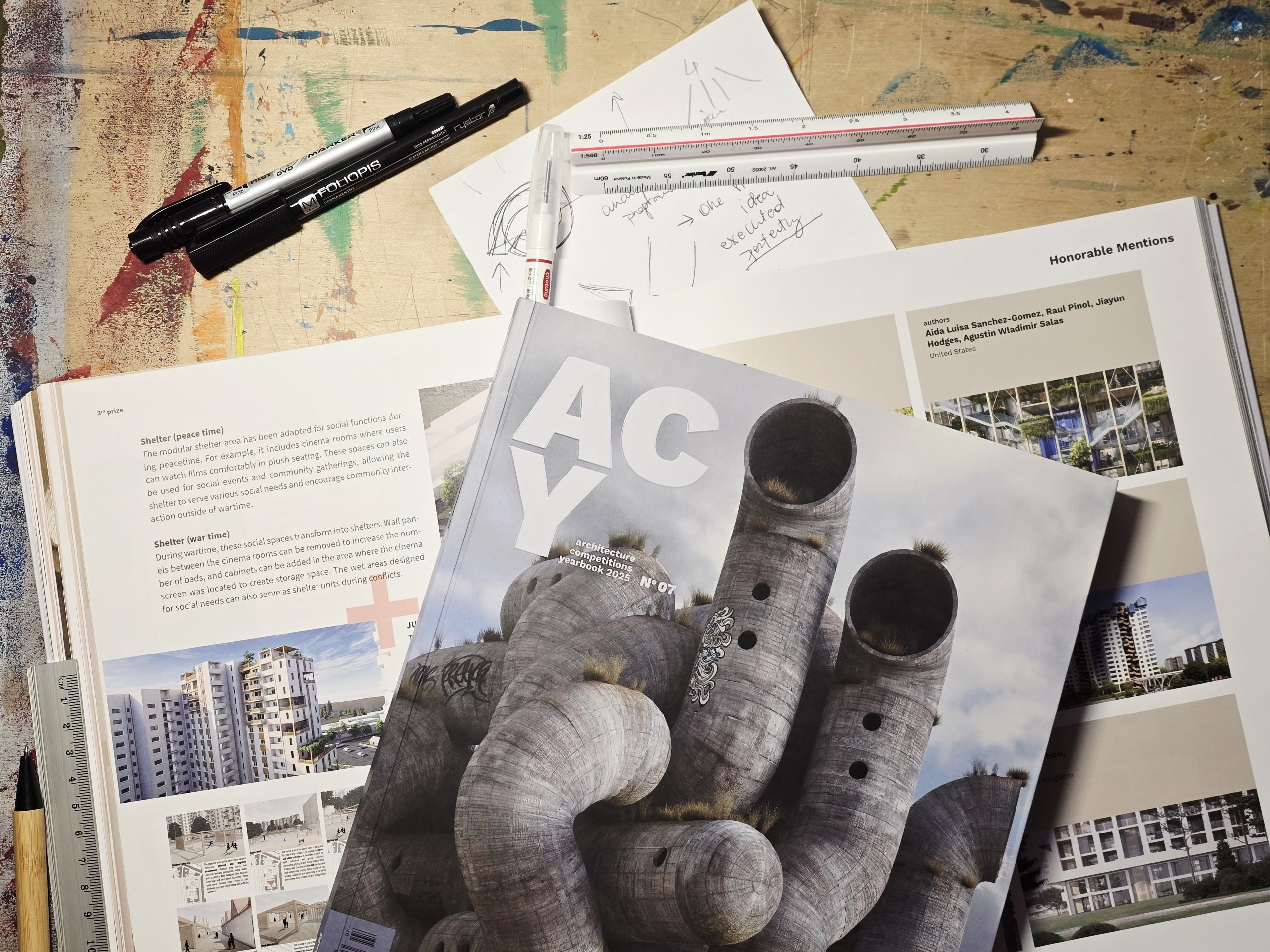
The story of this Maternity Center is a standout feature in the Architecture Competitions Yearbook 2025. We’ve curated this project alongside 10 other award-winning case studies to show you the real-world impact of thoughtful architecture. Whether you’re interested in modular systems, sustainable materials, or social impact, the ACY collection is your essential guide to what makes a project a winner in the eyes of an international jury.
Architecture Competitions Yearbook
The post Simplicity is Power: Designing for Motherhood in Rural Senegal appeared first on Competitions.archi.