


Is AI a wild horse that’s hard to tame, or can it be the most precise assistant in your studio?  Ismail Seleit introduces us to the “Controlled AI Design Paradigm”—a framework where the architect stays firmly in the driver’s seat.
In this technical yet accessible long-form article from the Architecture Competitions Yearbook, Ismail explains how tools like ControlNets and LoRA allow designers to feed precise massing models (from Revit or Rhino) into AI to get exactly the results they want. No more random generations—just pure, intentional design. From urban redevelopment case studies to tips on training your own “Brutalist” or “High-Tech” AI models, this piece is a roadmap for any architect who wants to use technology to augment, not replace, their creative vision.
Controlled AI Design Paradigm
Ismail Seleit outlines the “Controlled AI Design Paradigm,” a framework that guides architects in integrating AI into their work effectively, allowing the designers to use AI as their “virtual assistants” and offering architects new avenues for exploration and innovation.
Introduction: The Growing Role of AI in Architecture
In recent years, Artificial Intelligence (AI) has become an essential tool in architectural practice. Its integration into the design process introduces new methods for generating, refining, and optimizing architectural concepts. In architectural competitions, where innovation and precision are paramount, AI presents unique opportunities to enhance traditional design methods.
This piece will focus on two powerful AI tools: advanced ControlNets and fine-tuning Low-Rank Adaptation (LoRA) models, both of which offer architects new ways to control and refine their designs, producing more innovative and contextually appropriate outcomes.
AI as a Collaborative Tool in Architectural Design
AI in architecture goes beyond automation. It acts as a collaborator, enhancing the architect’s abilities by providing insights, generating multiple design options, and streamlining the design process. The Controlled AI Design Paradigm emphasizes AI as a tool that augments human creativity, allowing architects to explore a broader range of design possibilities without sacrificing control over the final outcome.

AI in Conceptual Design
In the early stages of design, where ideas are still forming, AI can assist by generating a wide array of conceptual options based on input parameters provided by the architect. This allows for the exploration of diverse solutions that might not have been immediately apparent. For example, an AI tool might take basic site information—such as dimensions, orientation, and surrounding context—and generate multiple massing studies that optimize different aspects of the project, such as sunlight exposure, views, or spatial arrangement.
This capability is particularly valuable in architectural competitions, where the ability to quickly generate and evaluate multiple design scenarios can give participants a significant advantage. By using AI to automate the initial stages of exploration, architects can focus their efforts on refining and developing the most promising concepts, thereby increasing the quality and coherence of their final submissions.


AI in Design Refinement
Once a concept has been selected, AI can further assist in refining the design. Tools such as generative design algorithms can optimize specific aspects of the project, such as structural efficiency, environmental performance, or material usage. These tools use a process of iteration, generating and testing thousands of variations to find the best solution according to the criteria set by the architect.
In this context, AI acts as a “design assistant,” handling the complex calculations and simulations that would be time-consuming for a human to perform manually. This allows the architect to focus on the overall vision and aesthetics of the project, confident that the technical aspects are being thoroughly addressed.


AI in Documentation and Communication
Beyond the design phase, AI can also play a role in the documentation and communication of architectural ideas. Natural language processing tools can assist in generating descriptive text, reports, and presentations, ensuring that the project’s narrative is clear and compelling. Additionally, AI-driven visualization tools can create realistic renderings and animations that help convey the design intent to clients, juries, and stakeholders.
The integration of AI into these various stages of the design process exemplifies the collaborative nature of the Controlled AI Design Paradigm. Rather than viewing AI as a replacement for the architect, this paradigm recognizes AI as a powerful tool that, when used correctly, can significantly enhance the architect’s capabilities.
Advanced ControlNets: Precision in Design through Compositional Input
One of the most significant advancements in AI for architecture is the use of advanced ControlNets. ControlNets enable architects to generate detailed designs based on specific, compositional inputs, such as massing models created in software like Revit or Rhino. This approach differs from traditional AI models, which often produce designs based on broader, more abstract guidelines. With ControlNets, architects can provide precise data that the AI uses to generate architectural forms that closely follow the initial input.

The Role of Compositional Input in Architectural Design
Compositional input refers to the use of specific, structured data to guide the design process. In architectural terms, this might include massing models, site plans, or even detailed diagrams of building systems. By using compositional input, architects can ensure that the AI-generated designs align with the project’s fundamental requirements and constraints.
For example, a massing model might define the basic volumetric structure of a building, including its height, width, and depth, as well as the location of key functional areas. By feeding this model into a ControlNet, the AI can generate detailed architectural forms that respect these basic parameters while exploring various aesthetic and functional possibilities.


Benefits of Using ControlNets in Architectural Competitions
The ability to use compositional input to guide AI-generated designs offers several advantages in architectural competitions. First and foremost, it allows architects to maintain control over the core aspects of their design while leveraging AI to explore and refine the details. This ensures that the final design is both innovative and feasible, balancing creative exploration with practical considerations.
Moreover, ControlNets can significantly accelerate the design process. By automating the generation of design variations, architects can quickly evaluate multiple options and make informed decisions about which direction to pursue. This is particularly valuable in competitions, where time is often limited and the ability to rapidly iterate on ideas can be a decisive factor in success.

Practical Application: Massing Models and Advanced ControlNets
Consider a competition where the brief requires designing a complex mixed-use development in a densely populated urban area. The site is constrained, with strict zoning regulations and significant environmental considerations. The architect begins by creating a massing model in Rhino that defines the basic structure of the development, including the placement of residential, commercial, and public spaces.
By inputting this massing model into an advanced ControlNet, the architect can generate a range of design variations that adhere to the site constraints while exploring different approaches to facade design, material selection, and spatial organization. The AI might generate hundreds of options, each with slight variations in form and function, allowing the architect to quickly assess the pros and cons of each design and refine the most promising ones.
In this way, ControlNets enable architects to maintain control over the key aspects of their design while benefiting from the AI’s ability to explore a wide range of possibilities. This approach not only enhances the quality of the final design but also ensures that it is well-suited to the specific challenges of the competition.

Fine-Tuning LoRAs: Customizing AI Models for Specific Architectural Concepts
Another significant advancement in AI-driven design is the fine-tuning of Low-Rank Adaptation (LoRA) models. LoRAs are lightweight, easily trainable models that can be adapted to learn specific design concepts or architectural narratives. This capability is particularly useful for architects who wish to create AI models tailored to the unique requirements of a specific project or competition brief.

Understanding LoRAs and Their Application in Architecture
LoRAs function by adapting pre-trained AI models to focus on a specific set of inputs. These inputs can be anything from architectural drawings and renderings to textual descriptions of design concepts. The model is trained on this data to learn the nuances of the design style or concept, allowing it to generate outputs that closely align with the desired aesthetic or functional requirements.
The fine-tuning process involves adjusting the parameters of the AI model to optimize its performance for the specific task at hand. Because LoRAs are lightweight, this process is relatively quick and does not require the extensive computational resources needed for training large, general-purpose AI models. This makes LoRAs an accessible and practical tool for architects who want to create custom AI models without needing specialized technical expertise.

Benefits of Fine-Tuning LoRAs in Architectural Design
The ability to fine-tune LoRAs offers several key benefits in architectural design. First, it allows architects to create AI models that are specifically tailored to the unique requirements of their projects. This ensures that the AI-generated designs are not only relevant but also deeply aligned with the project’s goals and constraints.
Second, the lightweight nature of LoRAs makes them highly adaptable. Architects can quickly train and deploy these models for a wide range of design challenges, from generating initial concepts to refining specific details. This flexibility is particularly valuable in competitions, where the ability to rapidly adapt to changing requirements can be a significant advantage.
Third, fine-tuning LoRAs allows architects to maintain a high degree of creative control over the design process. By customizing the AI model to focus on specific aspects of the project, architects can ensure that the generated designs reflect their vision and intent. This approach aligns with the principles of the Controlled AI Design Paradigm, which emphasizes the importance of using AI as a tool to enhance, rather than dictate, the design process.
Practical Application: Concept-Specific LoRAs in Architectural Design
To illustrate the practical application of fine-tuned LoRAs, consider a competition focused on designing a cultural center that reflects the local heritage and architectural traditions of the area. The architect wants to create a design that embodies the principles of Brutalism, a style characterized by its use of raw concrete, strong geometric forms, and minimal ornamentation.
To achieve this, the architect fine-tunes a LoRA model using a dataset of Brutalist buildings, including photographs, drawings, and textual descriptions of key design principles. The resulting AI model is then used to generate design variations for the cultural center, each one reflecting the characteristic features of Brutalism.
The fine-tuned LoRA model allows the architect to quickly explore a range of design options that align with the project’s thematic goals. These options can then be refined and developed further, ensuring that the final design is both contextually appropriate and visually compelling.
Case Studies: Implementing the Controlled AI Design Paradigm
The principles of the Controlled AI Design Paradigm have been applied in various real-world projects, demonstrating the practical benefits of integrating AI into the architectural design process. In this section, we will explore two case studies that highlight the use of advanced ControlNets and fine-tuned LoRAs in architectural competitions. These case studies are accompanied by a “Lessons Learned” section that outlines the key takeaways, challenges, and practical applications for future projects.
Case Study 1: Urban Redevelopment Project Using ControlNets
In a recent urban redevelopment competition, participants were tasked with designing a mixed-use development in a historically significant area of a major city. The site was constrained by strict zoning regulations and required careful consideration of the surrounding context.
The project utilized advanced ControlNets to generate a series of design options based on a detailed massing model of the site. The massing model included information on building heights, setbacks, and the placement of key functional areas, all of which were critical to ensuring that the design met the competition’s requirements.
By inputting this compositional data into the ControlNet, the AI was able to generate hundreds of design variations, each one exploring different approaches to facade articulation, material usage, and spatial organization. The architects then selected the most promising designs for further refinement, ultimately producing a proposal that balanced innovation with respect for the site’s historical context.

Lessons Learned:
- What Worked Well: The ability to generate numerous design variations using ControlNets proved invaluable in exploring creative possibilities while adhering to strict zoning and contextual constraints. This allowed the architects to iterate quickly and assess multiple options, significantly improving both the design’s efficiency and quality.
- Challenges Faced: Balancing innovation with respect for historical context proved challenging. The strict zoning regulations, combined with the need to preserve the site’s cultural heritage, limited some of the design possibilities. However, by using AI-generated variations, the team was able to find a middle ground that balanced creativity with practical constraints.
- Application to Future Projects: Students and professionals alike can take away the importance of structuring input data effectively when working with AI. Detailed massing models and site data help AI tools generate more contextually appropriate designs. Additionally, AI-generated designs should be seen as a starting point for further human refinement, not as final solutions.
Case Study 2: Cultural Center Design with Fine-Tuned LoRAs
In another competition, architects were asked to design a cultural center in a rural area known for its traditional craftsmanship and vernacular architecture. The challenge was to create a modern building that honored these traditions while introducing innovative design elements.
To meet this challenge, the architects employed a fine-tuned LoRA model to generate design variations that reflected the local architectural styles. The LoRA model was trained on a dataset that included images of traditional buildings, sketches, and descriptions of key design principles, such as the use of local materials, simple geometric forms, and functional layouts.
The fine-tuned LoRA generated a series of design options that captured the essence of the local architecture while incorporating modern design elements. The architects then refined these designs, selecting the most appropriate features for the final proposal. The result was a cultural center that was both contemporary and deeply rooted in the local context.
Lessons Learned:
- What Worked Well: Fine-tuning the LoRA model to focus on the vernacular architecture of the region enabled the architects to generate designs that were highly contextual. This ensured that the AI-generated designs respected the local traditions while also providing innovative solutions.
- Challenges Faced: One of the primary challenges was ensuring that the AI-generated designs stayed true to the project’s cultural and historical narrative. Fine-tuning the AI model required a high-quality dataset that accurately represented the local architecture, which involved significant preparation and expertise.
- Application to Future Projects: Architects working on culturally significant projects can benefit from creating customized AI models that are tailored to the specific architectural style or narrative of the project. Fine-tuning LoRAs offers a flexible and powerful way to ensure that AI-generated designs are both innovative and contextually appropriate. Students should focus on gathering high-quality input data, as this directly influences the relevance and quality of the AI outputs.
Workshops and Practical Training: Applying the Controlled AI Design Paradigm
To further explore the practical applications of the Controlled AI Design Paradigm, I have conducted workshops in collaboration with Nordify. These workshops are designed to introduce architects and students to the use of advanced AI tools in the design process, with a particular focus on ControlNets and LoRA models.
Workshop Structure and Content
The workshops are structured to provide both theoretical knowledge and hands-on experience with AI tools. Participants begin by learning about the principles of the Controlled AI Design Paradigm, including the importance of maintaining creative control while using AI to enhance the design process.
Next, participants are introduced to ControlNets and LoRA models, with detailed explanations of how these tools can be integrated into the design workflow. Case studies and real-world examples are used to illustrate the practical benefits of these tools, helping participants understand how they can be applied in different design scenarios.
The workshops also include practical exercises, where participants are given the opportunity to use ControlNets and LoRA models to generate design variations for a specific project. These exercises are designed to be hands-on and interactive, allowing participants to experiment with different inputs and see how the AI responds.

Key Insights and Takeaways
One of the key insights from these workshops is the importance of crafting effective inputs for AI tools. Whether using a ControlNet to generate design variations based on a massing model or fine-tuning a LoRA model to capture a specific architectural style, the quality of the input data is crucial to the success of the AI-generated designs.
Another important takeaway is the iterative nature of the design process when using AI. Participants learn that AI-generated designs should not be seen as final solutions but as starting points for further exploration and refinement. This iterative approach aligns with the principles of the Controlled AI Design Paradigm, which emphasizes the importance of maintaining creative control while using AI to enhance the design process.
Finally, the workshops highlight the accessibility of these AI tools. Participants discover that with the right guidance and training, they can quickly learn to use ControlNets and LoRA models to enhance their design work, regardless of their prior experience with AI.
Example Prompts and Tools: A Practical Guide
For architects interested in exploring the potential of ControlNets and LoRA models, the following prompts provide a starting point:
Example Prompt 1: Advanced ControlNet for Mixed-Use Development
- Tool: ControlNet integrated with Rhino
- Prompt: “Generate facade designs for a mixed-use development based on the provided massing model. Emphasize sustainable features like green walls and solar shading while ensuring the design fits with the surrounding urban context.”
- Outcome: The AI produces several facade options that respect the massing model while incorporating sustainable elements. The architect can then refine these designs, selecting the most appropriate elements for the final proposal.

Example Prompt 2: Fine-Tuned LoRA for Specific Architectural Styles
-
- Tool: Fine-Tuned LoRA Model
- Prompt: “Create design variations for a cultural center inspired by high tech futuristic architecture. Focus on strong geometric forms with minimal decoration, highlighting materiality and the sculptural form of the building.”
- Outcome: The AI generates design options that reflect the high tech style, providing a range of concepts for further development. The architect can then refine these options, ensuring that the final design aligns with the project’s goals.
Conclusion: The Future of AI in Architectural Design
As AI continues to evolve, its integration into architectural practice will become increasingly sophisticated, offering architects new avenues for exploration and innovation. The Controlled AI Design Paradigm advocates for a measured, intentional use of AI, where architects harness the technology to enhance their creative processes while retaining full control over the design outcome.
Advanced ControlNets and fine-tuning LoRAs represent the frontier of AI in architecture, providing architects with tools that are both powerful and accessible. By embracing these technologies, architects can push the boundaries of design, creating buildings that are not only technologically advanced but also deeply resonant with human values and experiences.
As the architecture industry continues to adapt to these technological advancements, it is imperative that architects remain at the helm of the design process, using AI as a means to amplify their creative vision and achieve design excellence in an increasingly complex world.
Author: Ismail Seleit

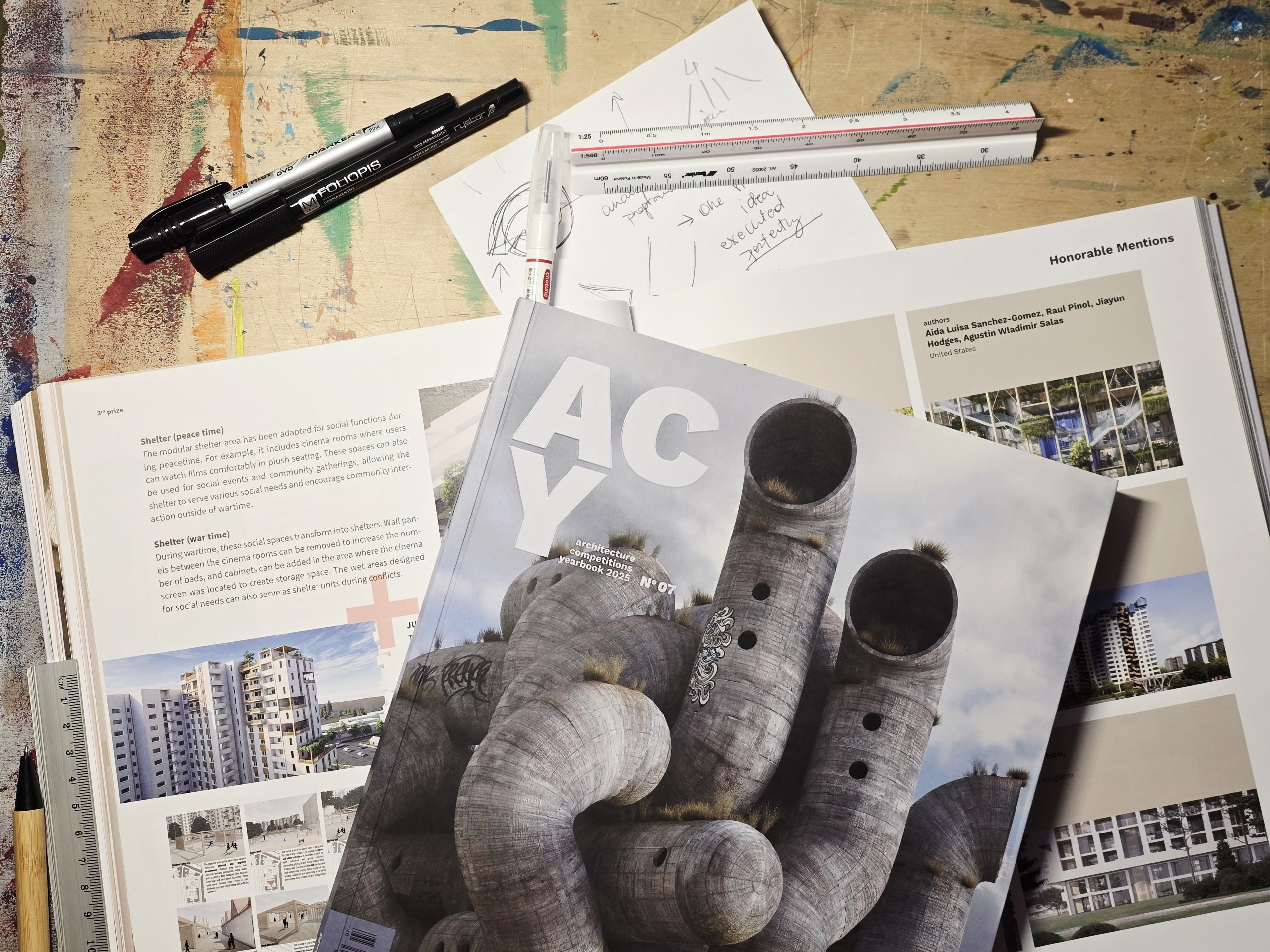
Ready to build your own virtual design team?  Ismail Seleit’s expert breakdown is the final piece of the puzzle in our Architecture Competitions Yearbook 2025. This edition is designed to be more than just a collection of projects—it’s a professional toolkit that prepares you for the future of the industry. To explore the full series of expert essays, along with 10 deep-dives into winning competition entries, make sure to grab your copy of the 2025 Yearbook today.
[Upgrade your workflow – Get the Yearbook here] 
The post Virtual Assistants: Mastering the Controlled AI Design Paradigm appeared first on Competitions.archi.